Close friends and Hollywood neighbors commissioned Martin to carve a portrait of their aging dog, Doug. The project began in November 2025 and was recently revealed to both Doug and his parents. Unlike most sculptures Martin creates, this piece was never intended for reproduction in bronze. It was conceived as a singular, stand-alone work, a personal tribute rather than a collectible item.
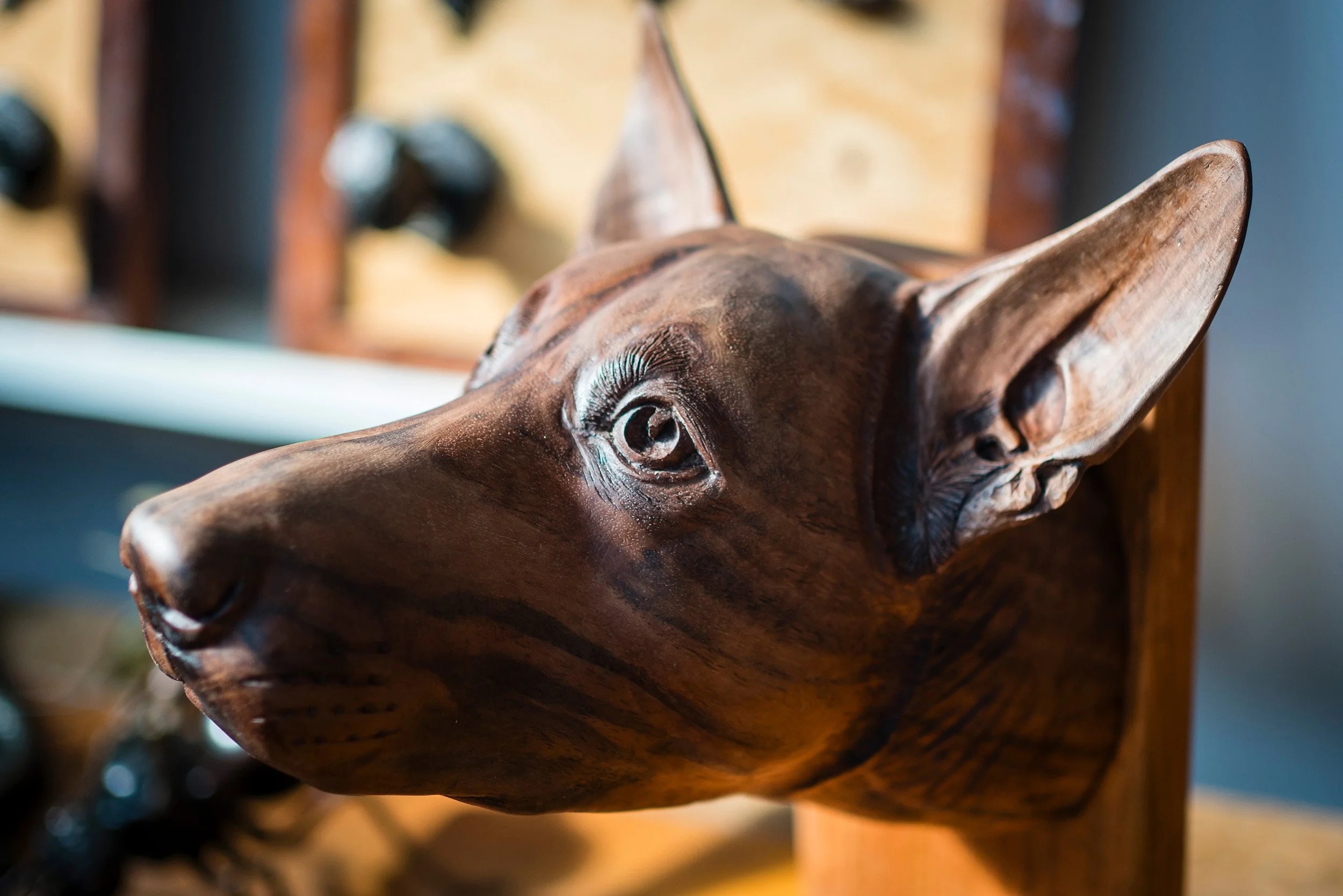
Profile view of the finished walnut portrait of Doug
The first step was determining both scale and material. Honduran mahogany was considered for its warm russet tones, while walnut offered deeper browns and expressive grain movement. During a visit to Santa Margarita, we stopped at Rustic Lumber, an old-school lumberyard reminiscent of the timber yards of Sussex, where felled trees are stacked and seasoned for years.
Rummaging through stacks of 12/4 walnut (approximately 3 inches thick), Martin discovered a striking old-growth board with rich chocolate veining. The wood itself made the decision.
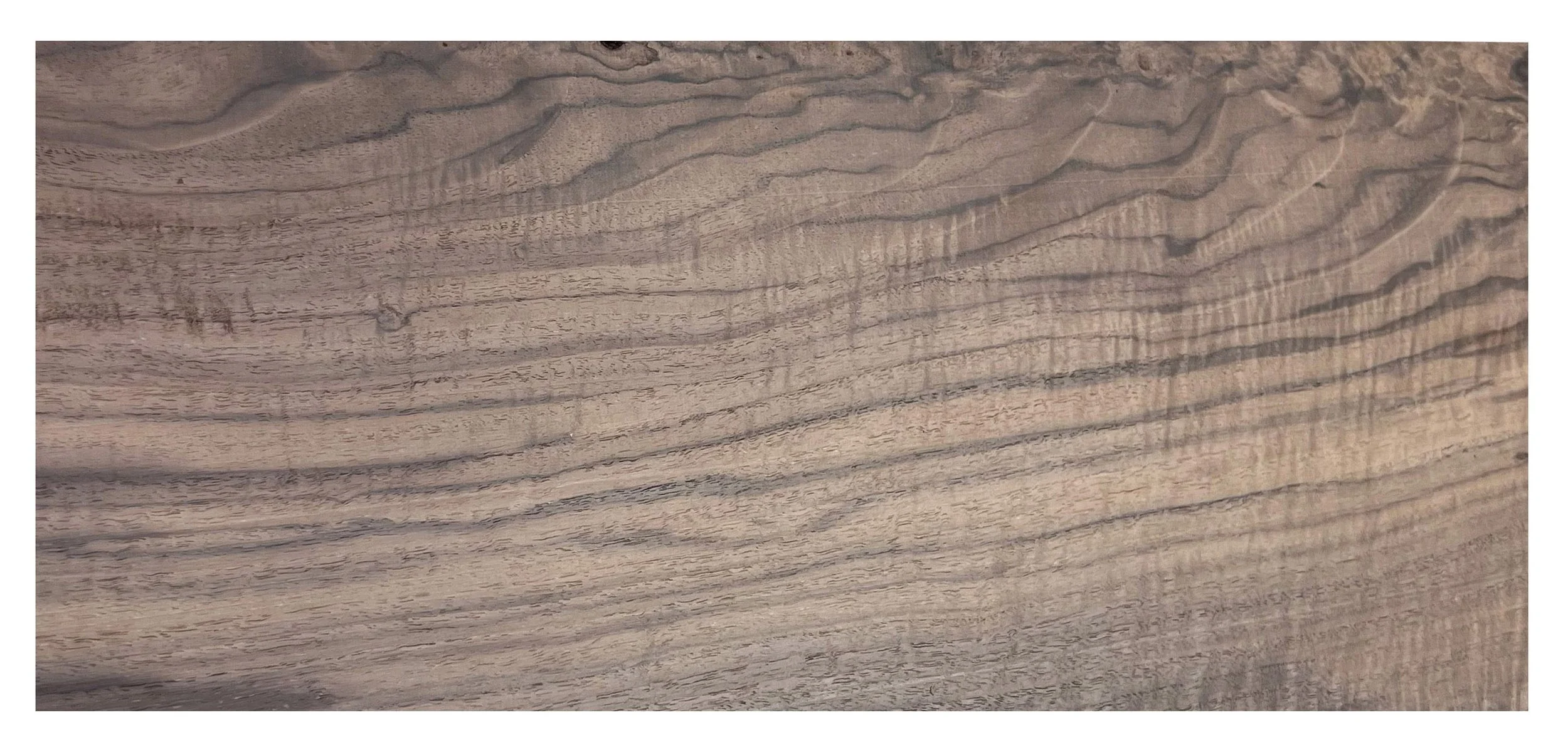
Old-growth walnut plank selected for carving the Doug dog portrait
Doug and his parents later visited the studio, where still photographs and a video were taken from multiple angles. These became essential reference points throughout the sculpture’s development.
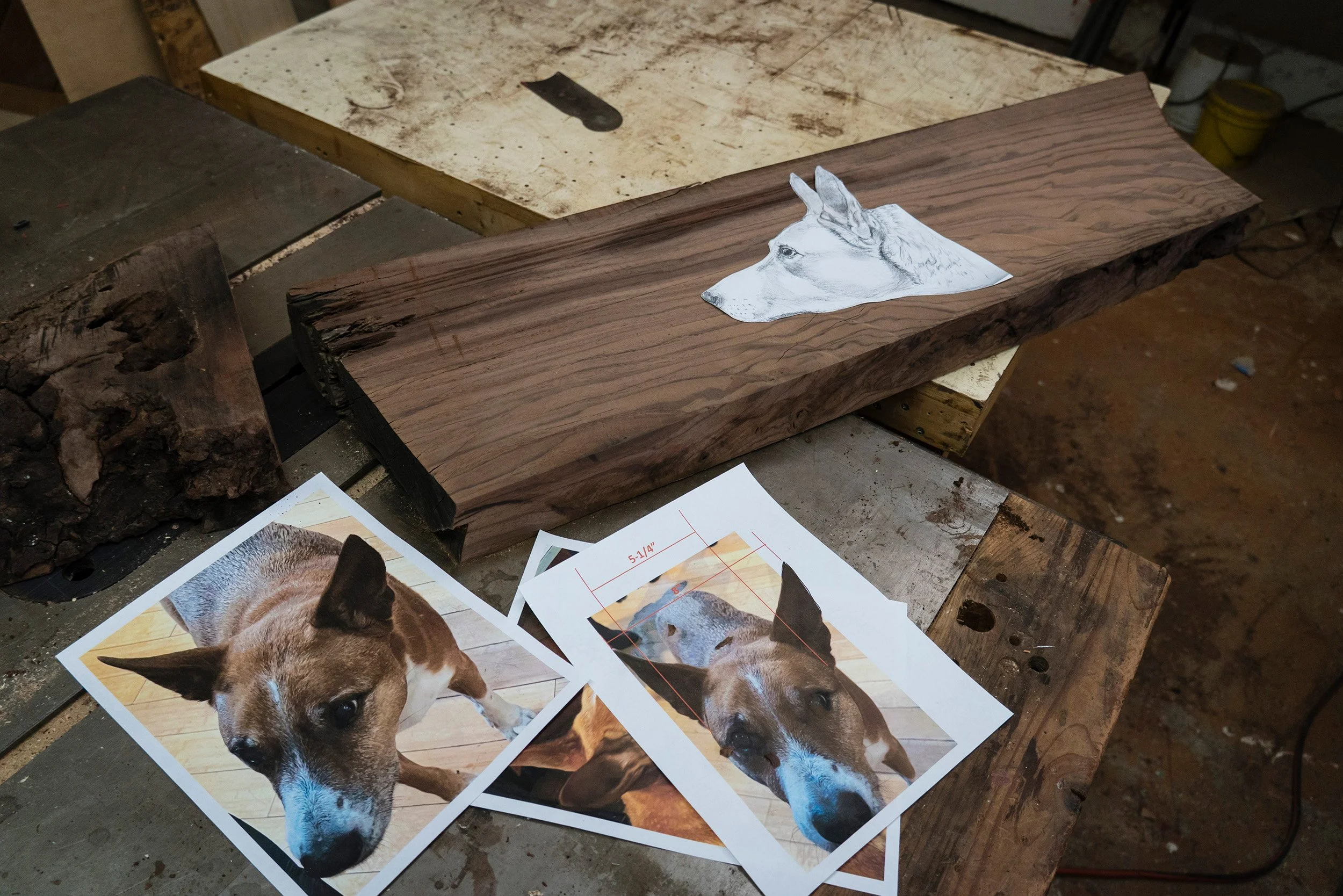
Reference photographs of Doug used throughout the carving process
Martin began with sketches, then laminated two walnut slabs to create a solid 6"W × 12"D × 8"H block. Using the selected profile drawing, he rough-cut the head, intentionally leaving off the ears.
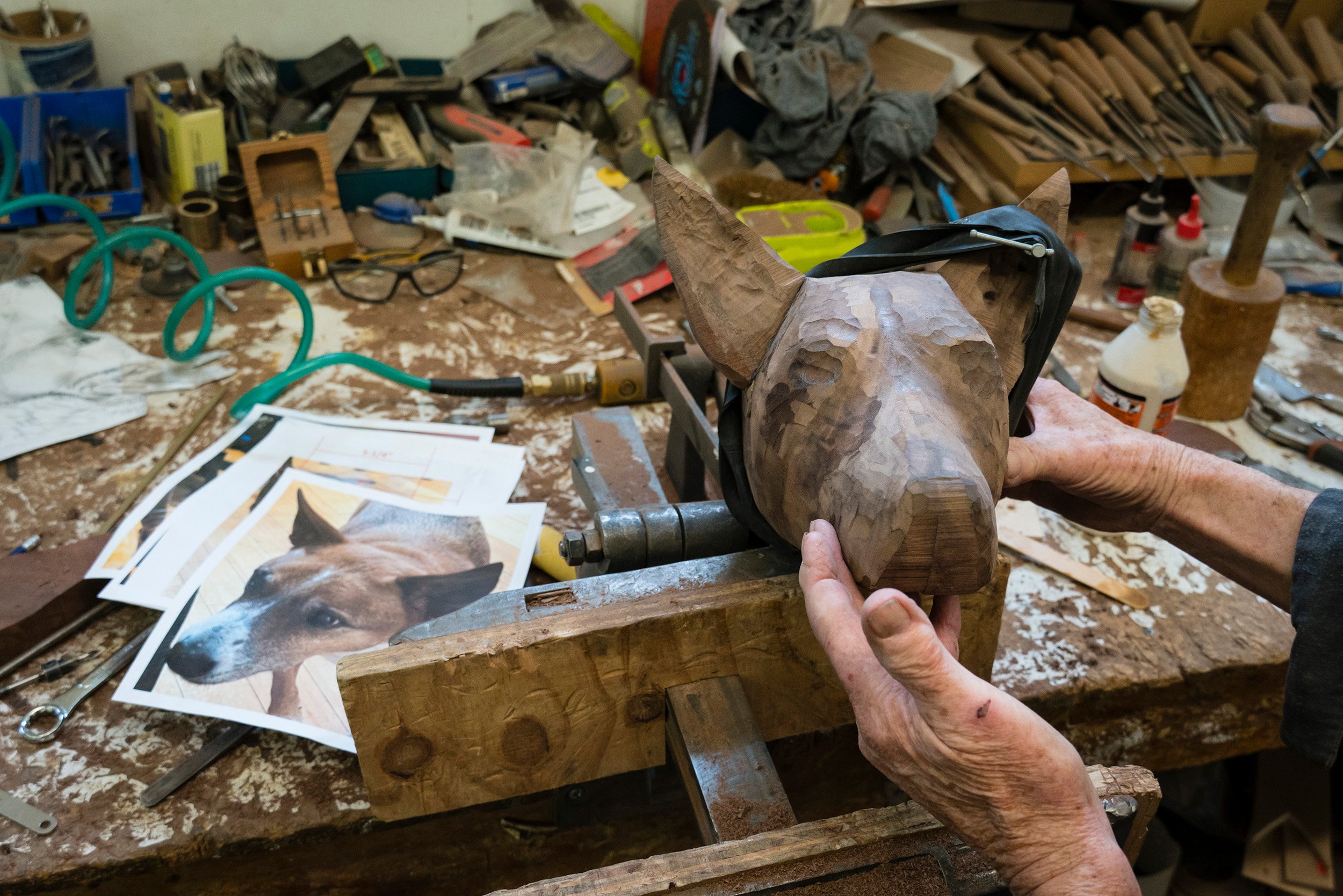
The rough carved walnut ears attached and aligned with the emerging portrait
Because ears project outward and are structurally vulnerable, they were carved separately and later joined. This allowed the grain to be oriented for strength rather than relying on end grain, which is more brittle and prone to splitting.
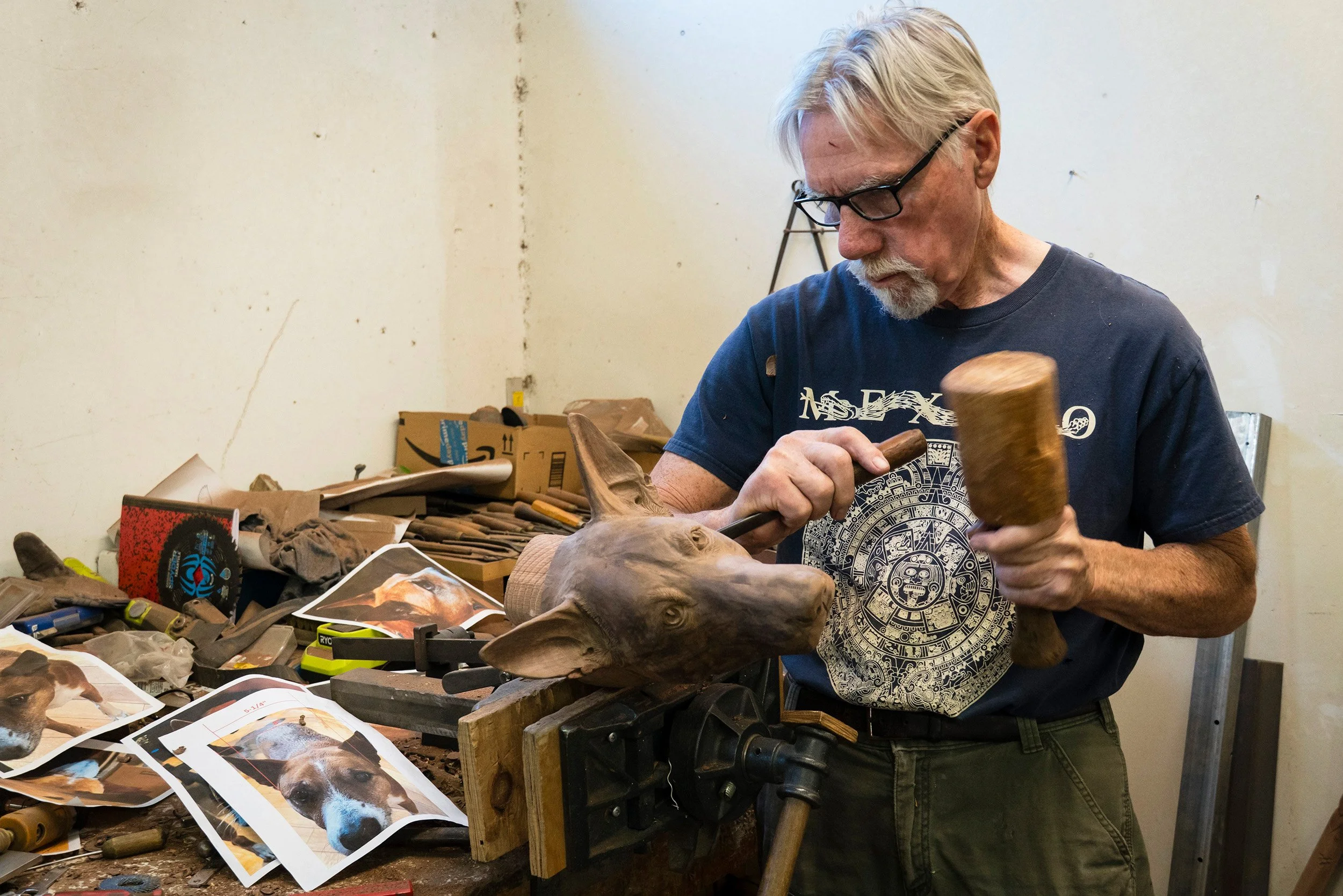
Shaping the walnut block with chisel and mallet
The portrait was never intended as a literal, photographic rendering. Instead, it was an artistic interpretation designed to capture Doug’s character and presence. Unlike painting, sculpture cannot rely on pigment to describe fur patterns, eye coloration, or subtle tonal shifts. Form, plane changes, and carved texture must convey what color would normally express.
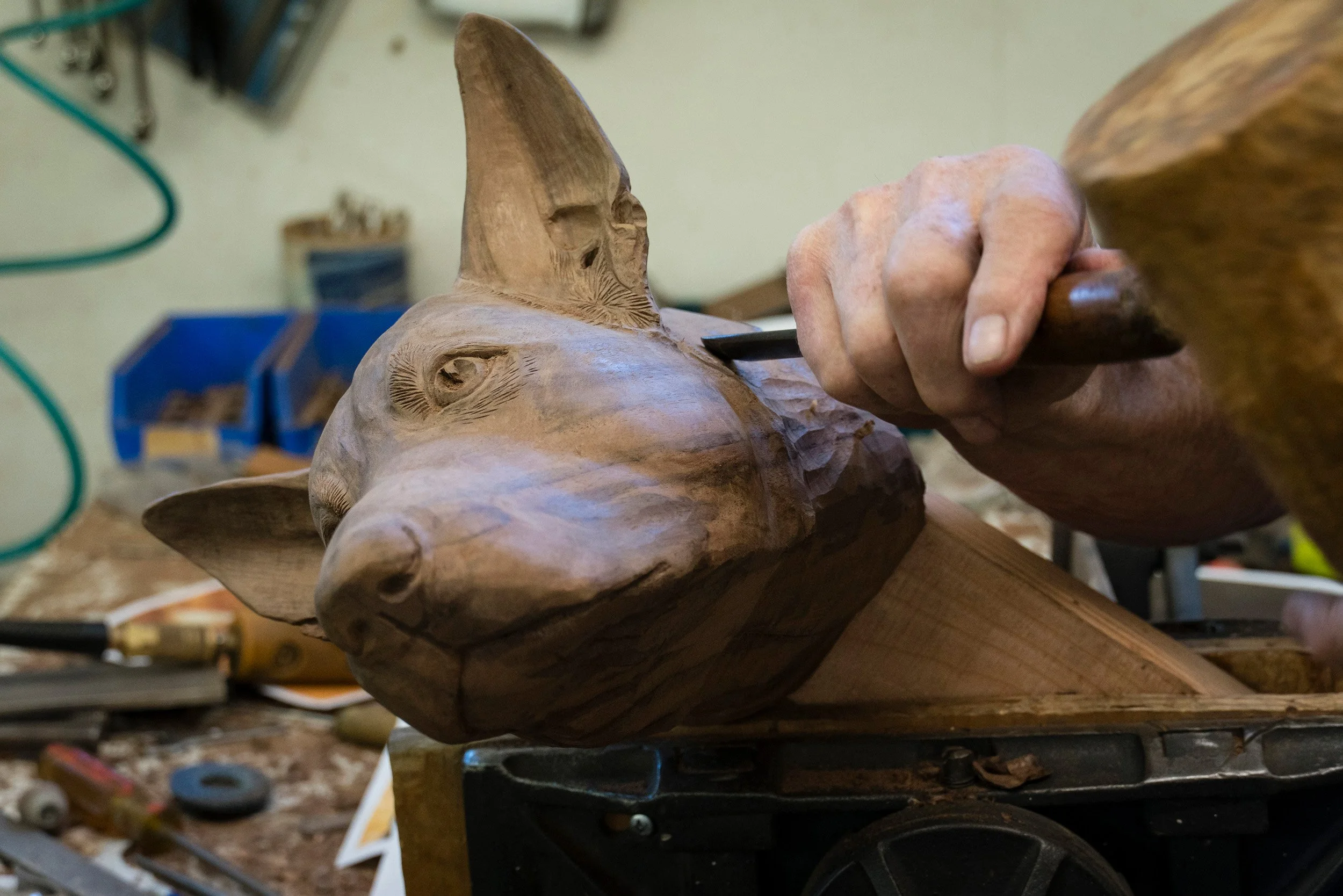
Refining the jawline and neck as structure begins to define expression
The Tools Behind the Portrait
The chisels used in carving Doug’s portrait were not modern imports but English-made carving tools, most more than half a century old. Stamped with names such as J.B. Addis of Sheffield, W. Marples & Sons, and Herring Bros of London, they represent a lineage of British edge-tool craftsmanship that predates modern mass production
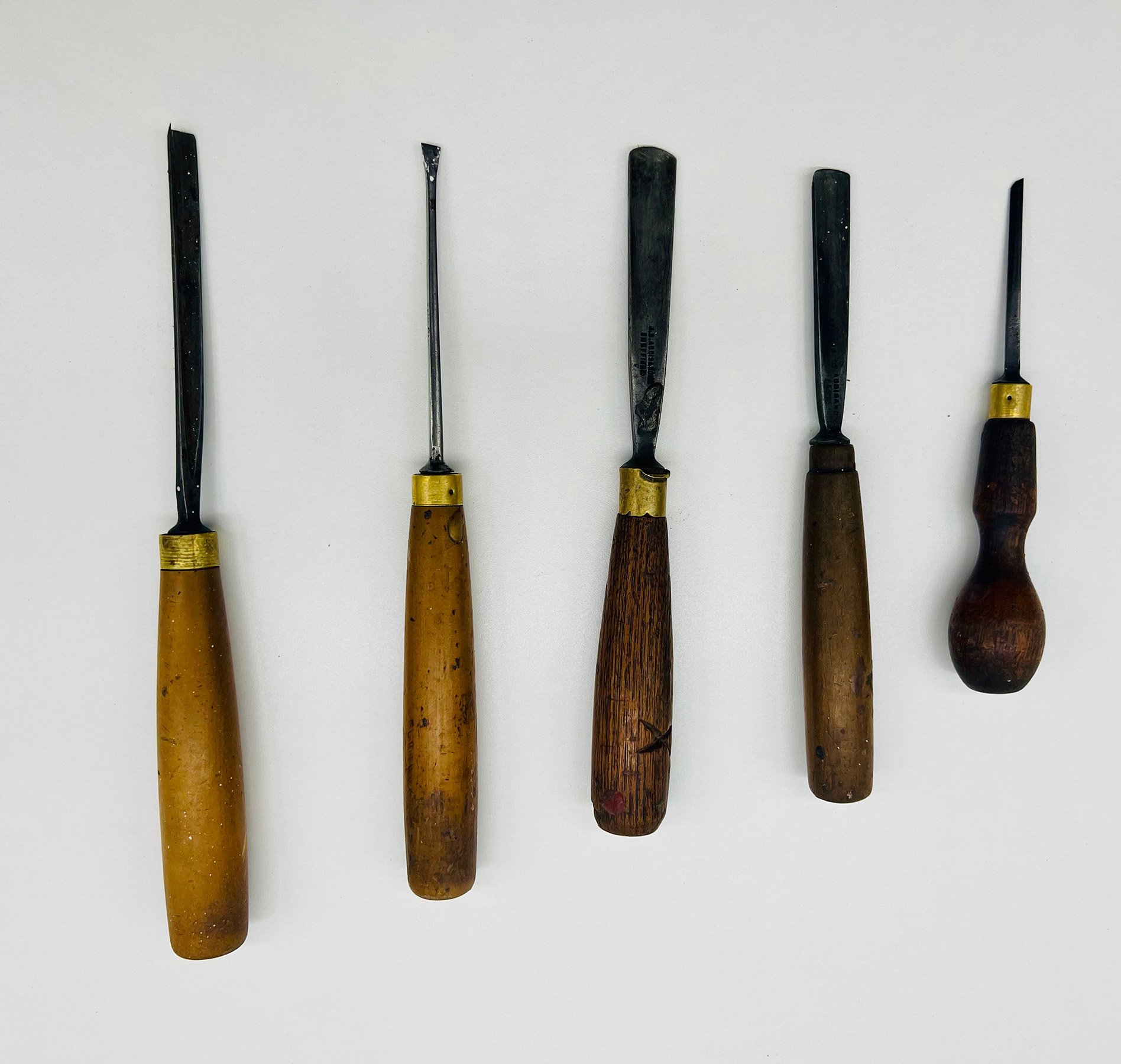
Left to right: a small V-chisel for fine edge definition; a medium gouge with a tight sweep articulating brow creases and defining musculature around the eyes; a larger gouge for shaping and removing mass; a skew chisel for refining the inside edge of the eyelid; and a large V-tool for defining fur around the neck
The age of the chisels was not incidental. Steel that has been sharpened and used for years develops its own character and balance.
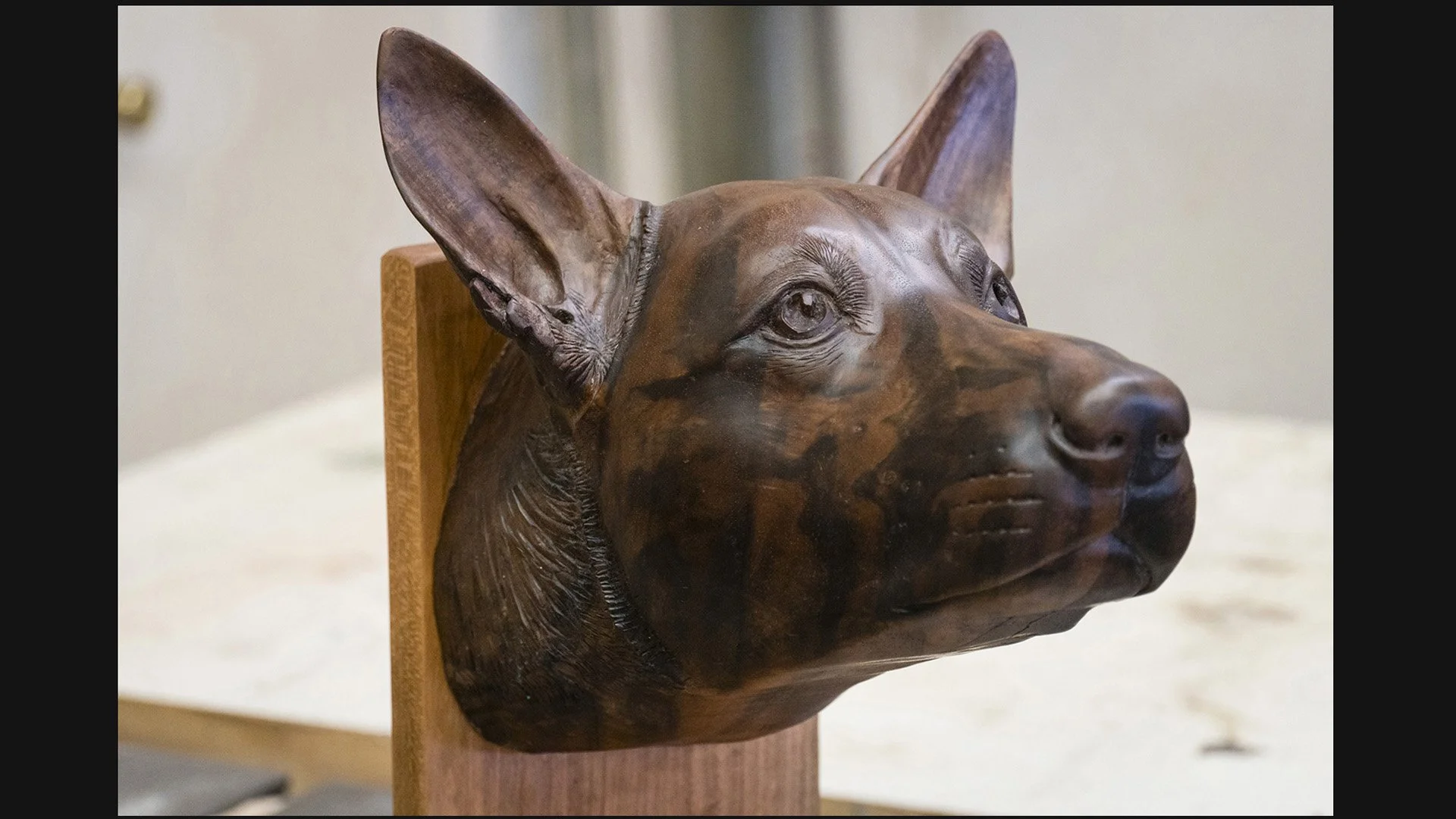
Completed walnut portrait of Doug carved by Martin Pierce
Through long familiarity, Martin knew almost instinctively which chisel would work best for each section of the sculpture. He moved constantly between tools, adjusting sweep, angle, and direction of cut as the form developed.
As the wood revealed itself, he responded to subtle shifts in grain and density, allowing the sculpture of Doug to gradually emerge from the block.
On Commissions and Our Dog Collection
While Doug’s portrait was created as a singular work, Martin does occasionally consider private sculpture commissions. Much depends on the individual dog. Certain breeds and coat types lend themselves more readily to carving than others; highly textured or densely curled coats, such as those of miniature poodles, can be challenging to translate into wood without losing clarity of form. Sculpture relies on structure, plane, and silhouette rather than surface color.
Carving a portrait of this nature is also a time-intensive process and therefore necessarily expensive. The form must be studied from multiple angles, often including views not typically photographed — beneath the chin, along the jawline, and across the crown of the head. Unless one is fortunate enough to be a neighbor, as in Doug’s case, a comprehensive set of still photographs and video from many perspectives is essential. Doug was both distinctive in character and readily accessible, which made the process uniquely possible.
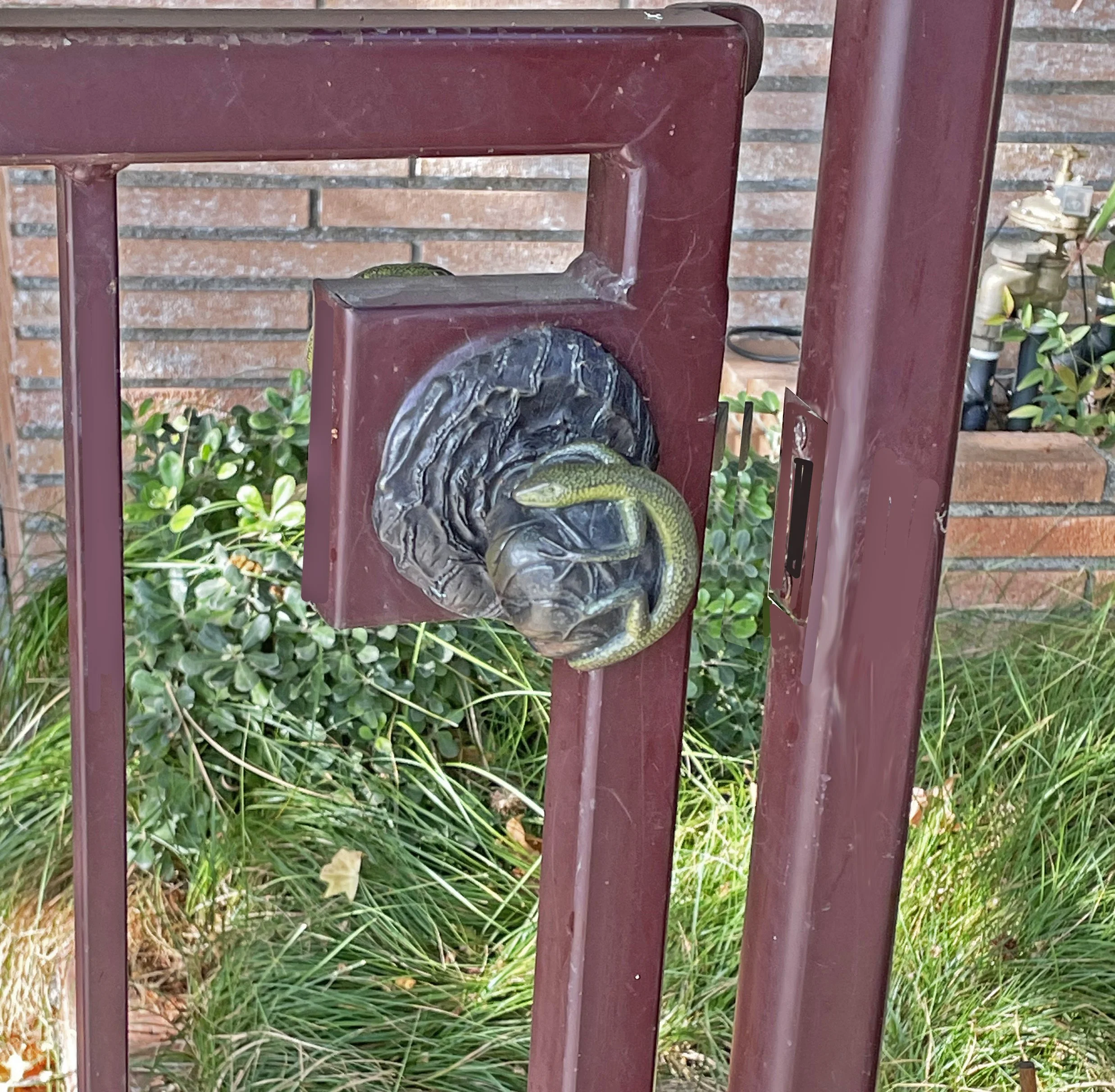
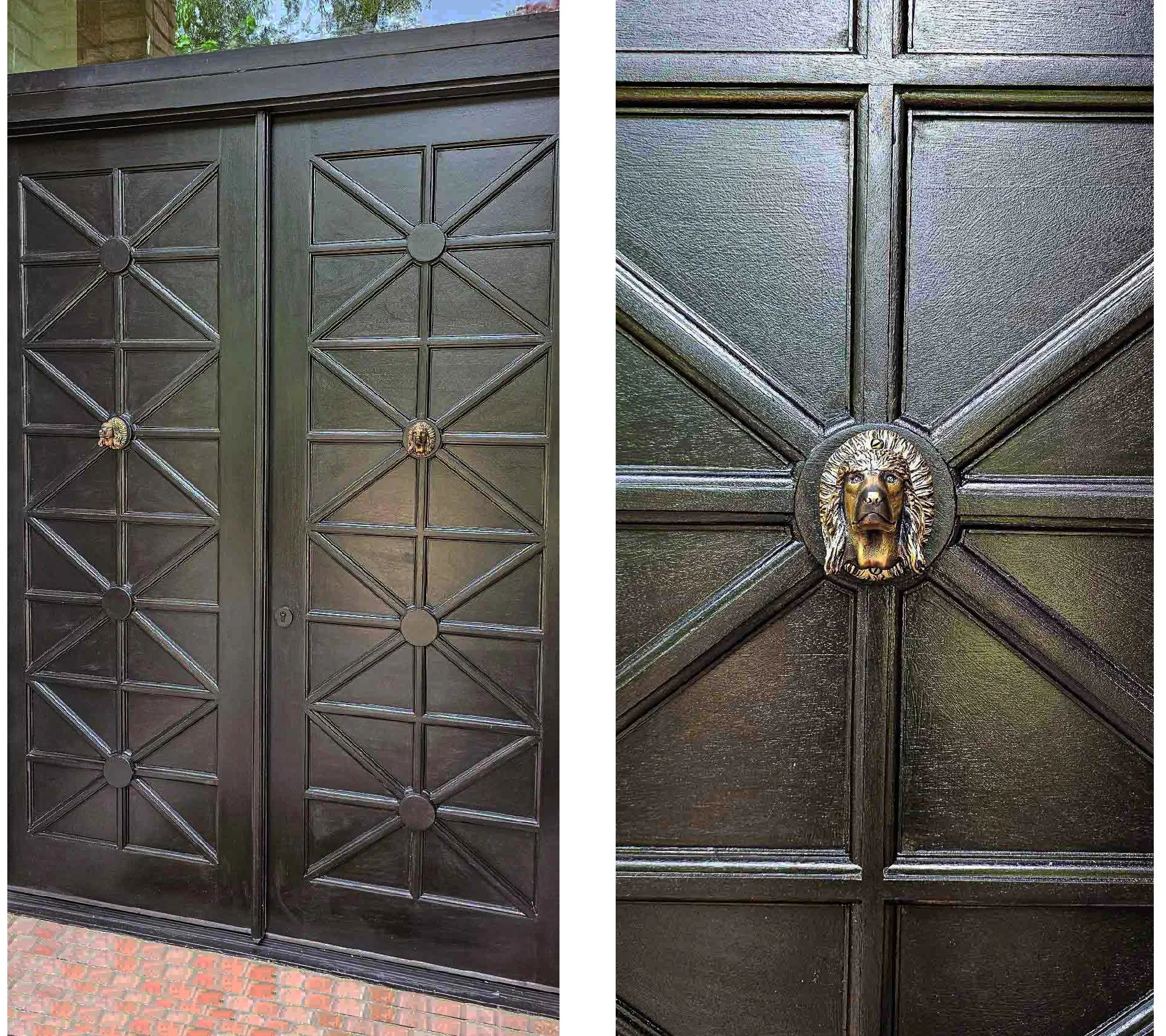
For those drawn to canine form expressed in a different way, Martin’s existing collection of dog door knobs and hardware offers sculptural interpretations that translate beautifully into functional art.
Photography Credit
The photographs in this post were taken by Maria Ramirez-Adams, whose careful eye captured both the intimacy of the studio process and the evolving presence of the sculpture. Her images document not only the finished portrait but the progression of form as it emerged from walnut.
Video Documentation
Maria Ramirez-Adams also created a short film documenting Martin carving Doug the Dog. The video can be viewed on YouTube:
https://youtu.be/i2sQu_j7aVQ?si=N0AOXxXNK6aIEq2d
Maria’s work as a videographer brings patience and sensitivity to craft-based storytelling, allowing viewers to experience the rhythm of the tools, the shaping of the form, and the concentration behind the finished piece.